Moroccan Culture and Traditions: A Traveler’s Guide
September 9, 2026 · 4 min read
Moroccan culture is a layering of Amazigh (Berber), Arab, Andalusian and West African influences, bound together by Islam and an unusually strong tradition of hospitality. A little context before you arrive makes every market, meal and mosque visit easier to read. For where to experience it with someone who can explain it, see our Morocco tours.
Amazigh (Berber) Heritage
The Amazigh are Morocco’s indigenous people, and their language, Tamazight, is now an official language written in the Tifinagh script you will see on road signs. Amazigh identity is strongest in the Atlas Mountains and the south, where villages, weaving patterns, jewellery and the earthen kasbahs like Ait Ben Haddou all carry it.
Hospitality and Mint Tea
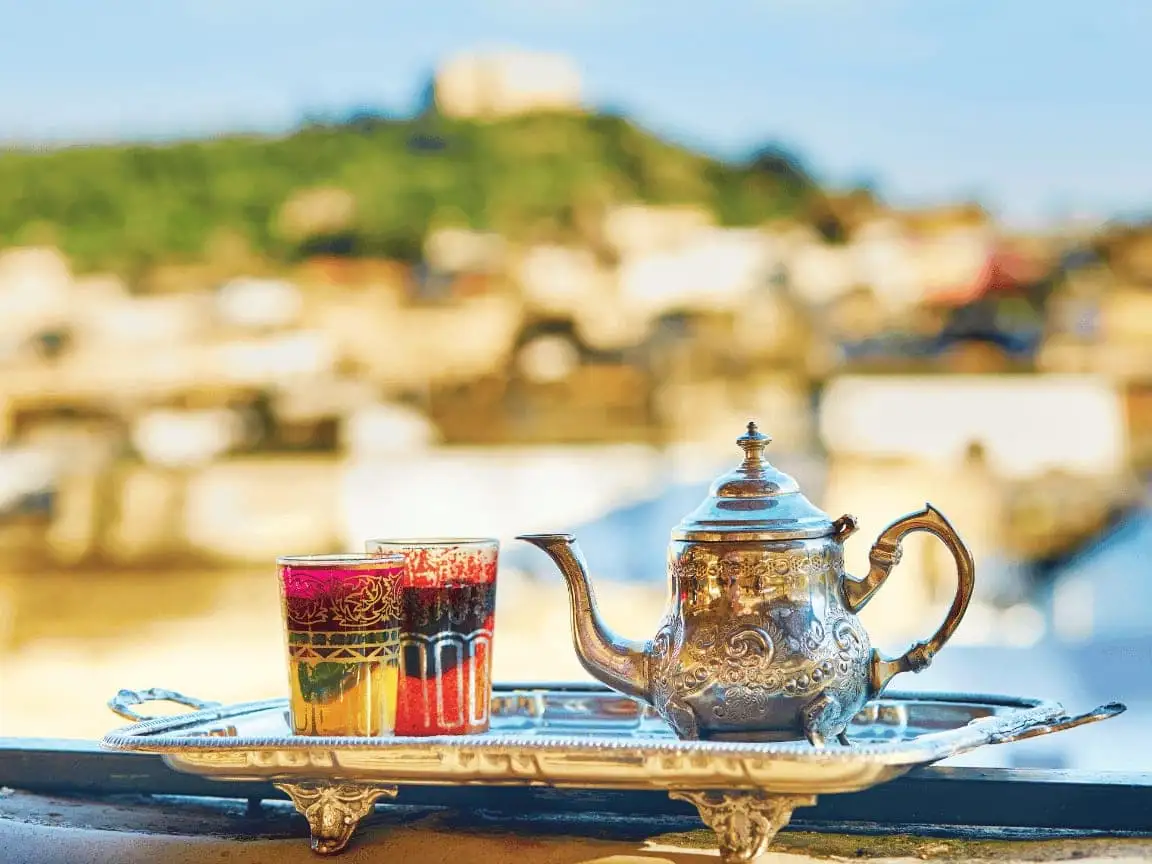
Guests are treated as a blessing, and the welcome almost always comes as a glass of sweet mint tea (atay), poured from height to build a foam. A Saharan saying calls the three glasses "gentle as life, strong as love, bitter as death" — refusing tea outright reads as cold, so accept at least one even if you only sip it.
Language
Day to day, Moroccans speak Darija (Moroccan Arabic) and Tamazight. French is widespread in cities and business, Spanish lingers in the north, and English is growing fast in tourism. A few words of Darija — "salam" (hello), "shukran" (thank you), "la shukran" (no thank you) — are always welcomed.
Religion and the Rhythm of the Day
Morocco is a Muslim country, and the five daily calls to prayer set the pace of a town. Friday is the main prayer day, when families gather over couscous after midday prayers. Most working mosques are closed to non-Muslims; the great exception is the Hassan II Mosque in Casablanca, which runs guided tours.
Ramadan
During the month of Ramadan, most Moroccans fast from dawn to sunset. Daytime cafes are quiet and some restaurants close, while evenings turn festive around the breaking of the fast (iftar). Travel is still very doable, but out of respect it is best not to eat, drink or smoke openly in the street during daylight. Ramadan moves about eleven days earlier each year — check the dates against our best time to visit guide.
Dress and Mosque Etiquette
Modest dress — shoulders and knees covered — is the norm, more strictly in rural areas and medinas than on the coast or in tourist Marrakech. Women do not need a headscarf as visitors except inside a working mosque. Remove your shoes when entering a home or a prayer space. Our what to wear in Morocco guide has the specifics for men and women.
The Hammam
The weekly steam bath is a social institution as much as a wash. Public hammams alternate hours for men and women; you bring or buy black soap, a kessa exfoliating glove and a change of underwear. A private or hotel hammam is a gentler introduction if the public version feels daunting.
The Souk and the Art of Bargaining
Haggling is expected on crafts and souvenirs, though not on food staples or fixed-price shops. Keep it good-humoured: let the seller open, name a price you would genuinely pay, and be willing to walk away. Mint tea offered mid-negotiation is hospitality, not an obligation to buy. Our things to do in Marrakech guide covers the main souks.
Craft Traditions
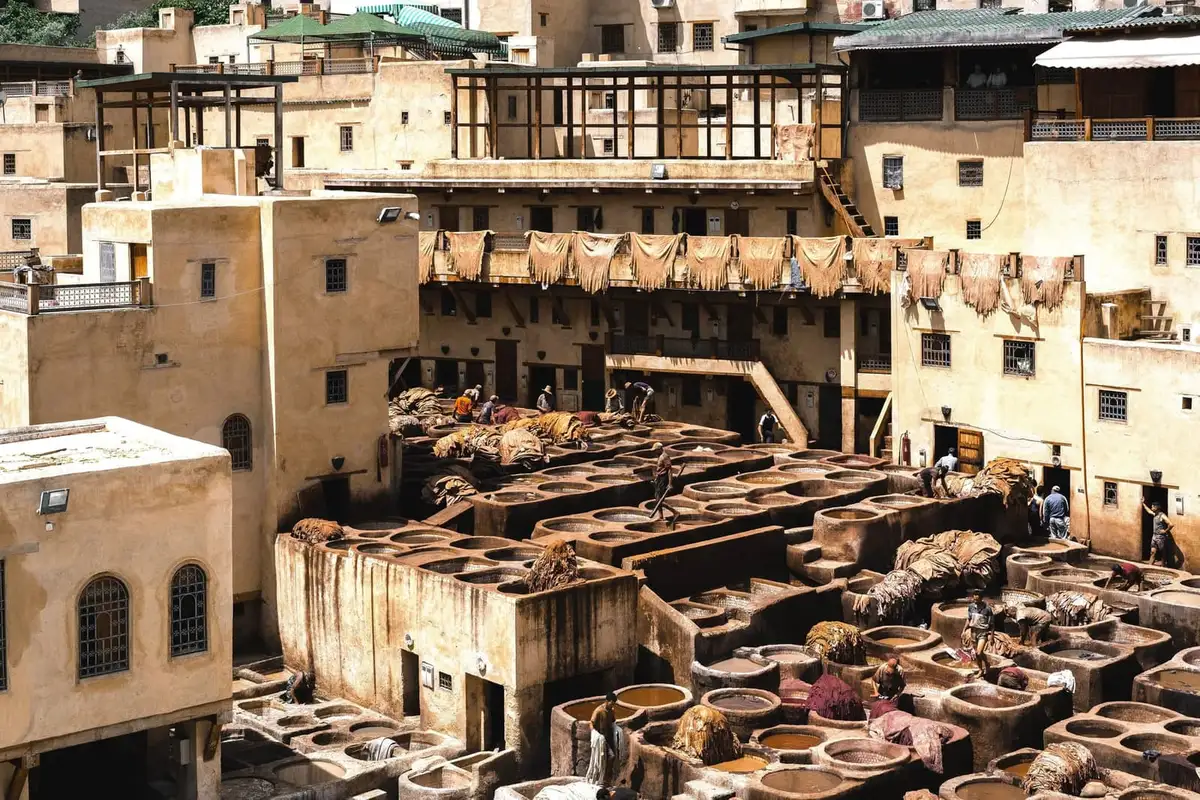
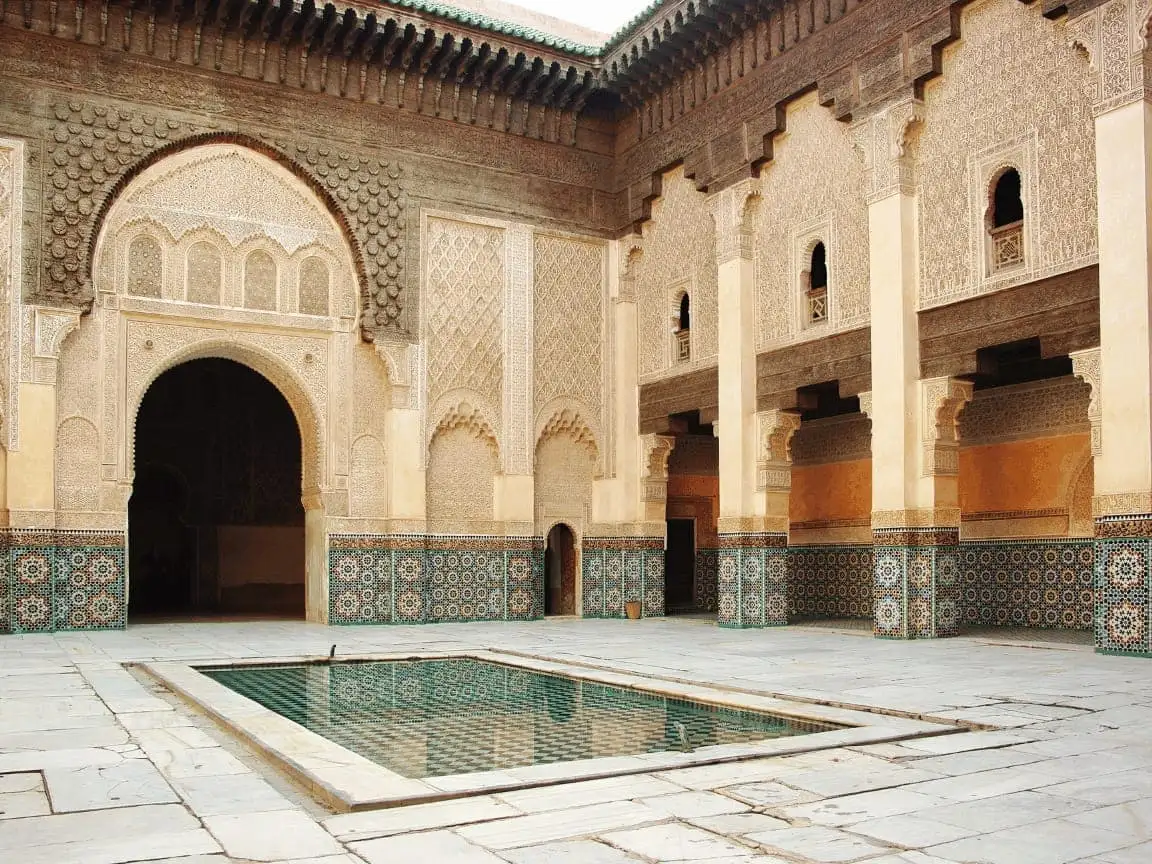
Each region has its signature: zellige mosaic and tadelakt plaster everywhere, knotted carpets and flat-woven kilims from the Middle Atlas, leather from the Fes tanneries, silver and dates from the south, and argan oil pressed by women’s cooperatives around Essaouira.
Food as Culture
A shared tagine or couscous is eaten with the right hand and bread, taking only from the wedge of the dish in front of you, and beginning after the host says "bismillah". Our guide to Moroccan food covers the dishes themselves.
Music and Festivals
Listen for Gnaoua (with its own festival in Essaouira each June), Andalusian classical orchestras, Amazigh ahwash drumming and pop chaabi at weddings. Local saint festivals (moussems) and the Fes Festival of World Sacred Music are worth timing a trip around.
Practical Do’s and Don’ts
Do greet people before asking for directions, ask before photographing anyone, and carry small change for tips. Don’t speak critically of the monarchy, don’t hand things over with your left hand, don’t walk into a working mosque uninvited, and don’t photograph police or military sites. Travelling with a local guide is the most direct way into all of this — contact us or browse our tours.
Suggested Tours
Suggested Blogs
Frequently Asked Questions
Ready to Experience Morocco?
Let our local experts design a private, tailor-made Morocco tour built around what you actually want to see.